
Pet health journal for symptoms, habits, and everyday care notes
Small changes can be hard to explain later. Pawmi helps you log a one-tap daily check-in plus symptoms, behavior, appetite, weight, medications, and vet questions so your pet's story stays clearer over time.
Available on iPhone, Android, and the web — one account, synced everywhere.
What is a pet health journal?
A pet health journal tracks symptoms, appetite, water intake, potty changes, weight, medications, behavior, sleep, activity, and questions for the vet over time. It helps you explain what changed, when it started, how often it happened, and whether it is improving or worsening.
How do most pet parents track health changes today?
Most pet parents notice small changes, but the notes often live in places that are hard to use later.
- Mental notes
- Family WhatsApp messages
- Scattered phone notes
- Random photos
- The promise that you will remember it later
- Trying to explain symptoms from memory at the vet
Why does memory break down before the vet visit?
The hard questions often come later: When did this start? How often has it happened? Is it getting better or worse? Memory gets fuzzy, especially with intermittent symptoms that appear at home but not in the exam room. A short note from the day it happened can be more useful than a long explanation a week later.
What does a better pet health journal capture?
A better system is simple enough to maintain on ordinary days and clear enough to use when care gets stressful.
What changed
Note the specific symptom — vomiting, limping, scratching, or appetite loss — so your vet sees the exact pattern instead of a vague summary.
When it started
Recording the first date helps your veterinarian distinguish a one-day upset stomach from a recurring issue that needs investigation.
How often it happened
Frequency matters: once a month is different from twice a day. Tracking each occurrence reveals whether symptoms are escalating or stable.
What else changed around the same time
New food, a house move, seasonal allergies, or a second pet — context clues often point your vet toward the right diagnosis faster.
What was tried
Write down any home remedies, diet changes, or over-the-counter treatments you used so your vet knows what has already been ruled out.
Whether it improved
Tracking improvement or regression over days gives your veterinarian a clearer picture of whether current care is working or needs to change.
What to ask the vet
Jot down questions as they come to you — during the appointment, it is easy to forget the thing that worried you most at 2 a.m.
Dog vs cat health journal signals
Dogs and cats often show changes differently. A good health journal leaves room for species-specific clues while keeping symptom notes clear enough to share with a vet.
Dog health journal signals
- Appetite changes
- Stool changes
- Vomiting
- Limping
- Scratching
- Lower energy
- Drinking more or less than usual
Cat health journal signals
- Hiding
- Litter box changes
- Appetite changes
- Grooming changes
- Vocalization changes
- Weight changes
- Breathing changes
How does Pawmi help with pet health journaling?
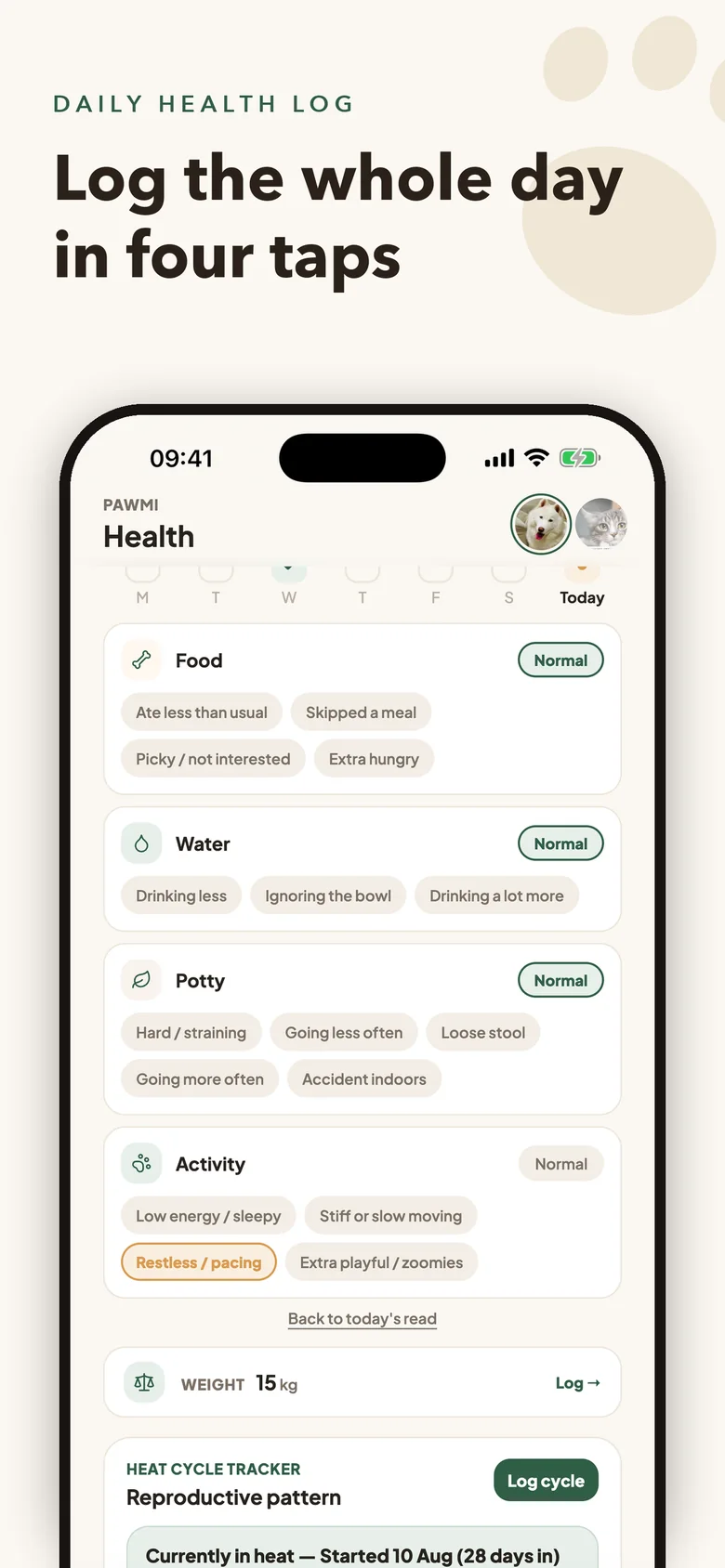
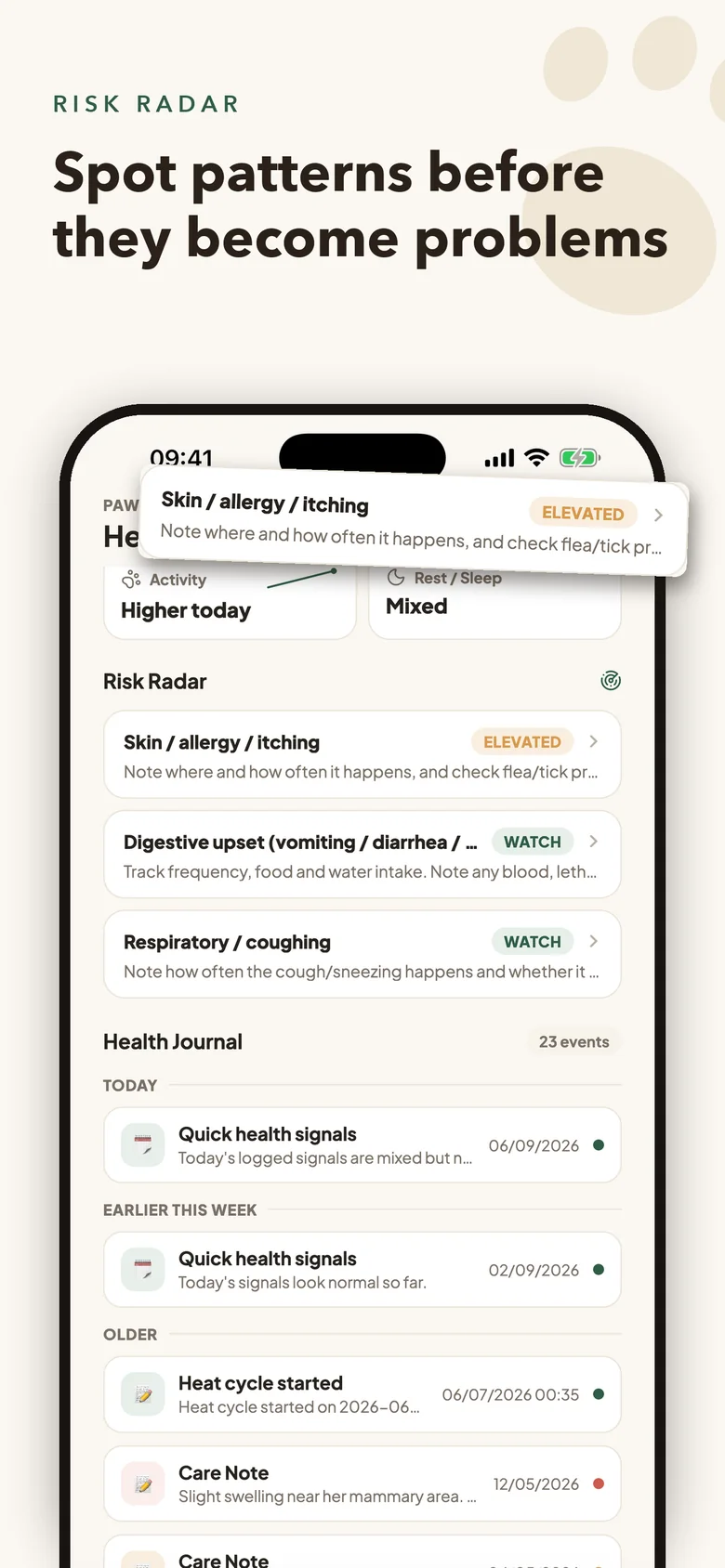
In Pawmi's Health tab, a one-tap daily check-in covers food, water, potty, and activity and builds a streak. Notes, symptoms, photo checks, weight entries, and check-ins land on one Health Journal timeline, and notes can be backdated to the day something actually happened. Risk Radar watches for 12 health patterns with separate dog and cat logic and shows the dated evidence behind each one plus a plain next step. A photo check gives calm observations and an urgency level for a lump, rash, or eye that worries you. It is pattern-watching, not diagnosis: Pawmi does not diagnose pets or replace veterinary advice.
Pet Health Journal Checklist
Use this checklist when you are not sure what to write down.
- Appetite
- Water intake
- Bathroom changes
- Vomiting, diarrhea, coughing, itching, or limping
- Sleep or restlessness
- Activity level
- Weight
- Medications
- New food or treats
- Travel, grooming, stress, or weather changes
- Questions for the vet
Copyable pet health note template
Copy these fields into a note when something changes and you want cleaner context for your veterinarian.
Example journal entries
These examples are non-diagnostic. They preserve context so a veterinarian can review the pattern if it continues or becomes concerning.
- Ellie ate less than usual at dinner, drank normally, no vomiting, seemed restless at night.
- Cat used the litter box more often than usual today; appetite normal; no visible pain.
- Dog started scratching after grooming; no swelling; note to ask vet if it continues.
See Pawmi in action
Real screens from Pawmi 1.4.0 on iPhone, picked to match this guide.
Keep building a calmer pet care system
These related care guides cover the adjacent tasks pet parents usually manage in the same messy places.
Frequently asked questions
What should I write in a pet health journal?
Write down symptoms, appetite, water intake, bathroom changes, weight, medications, behavior, sleep, activity, and questions for your veterinarian.
Is a pet health journal useful even if my pet is healthy?
Yes. Baseline notes make it easier to notice changes later and can help you answer your veterinarian's questions more accurately.
What symptoms should I track before a vet visit?
Track when symptoms started, how often they happened, whether they are improving or worsening, and any changes in appetite, water, bathroom habits, energy, or behavior.
How often should I update a pet health journal?
Update it when something changes, when medication or care instructions change, or before and after vet visits. Daily notes are useful during active concerns but not always necessary.
Should I track behavior changes in cats?
Yes. Cats can hide discomfort, so changes in hiding, grooming, litter box use, appetite, vocalizing, or social behavior can be useful to record.
Should I track appetite and water intake?
Yes. Appetite and water changes can be useful context for your veterinarian, especially when paired with dates and other observations.
Can Pawmi help spot patterns in pet notes?
Yes. Risk Radar looks for 12 health patterns across your check-ins, notes, and records, and shows the dated entries behind each one plus a plain next step. Those are signals to discuss with your veterinarian, not a diagnosis.
Can I log something that happened a few days ago?
Yes. When you add a note in Pawmi you can pick an earlier date, so a limp you noticed last Tuesday lands on the right day of the journal.
Does Pawmi diagnose health problems?
No. Pawmi does not diagnose, treat, or replace a veterinarian. Ask your veterinarian about symptoms, treatment, vaccines, or urgent concerns.
Make pet care easier to remember and explain
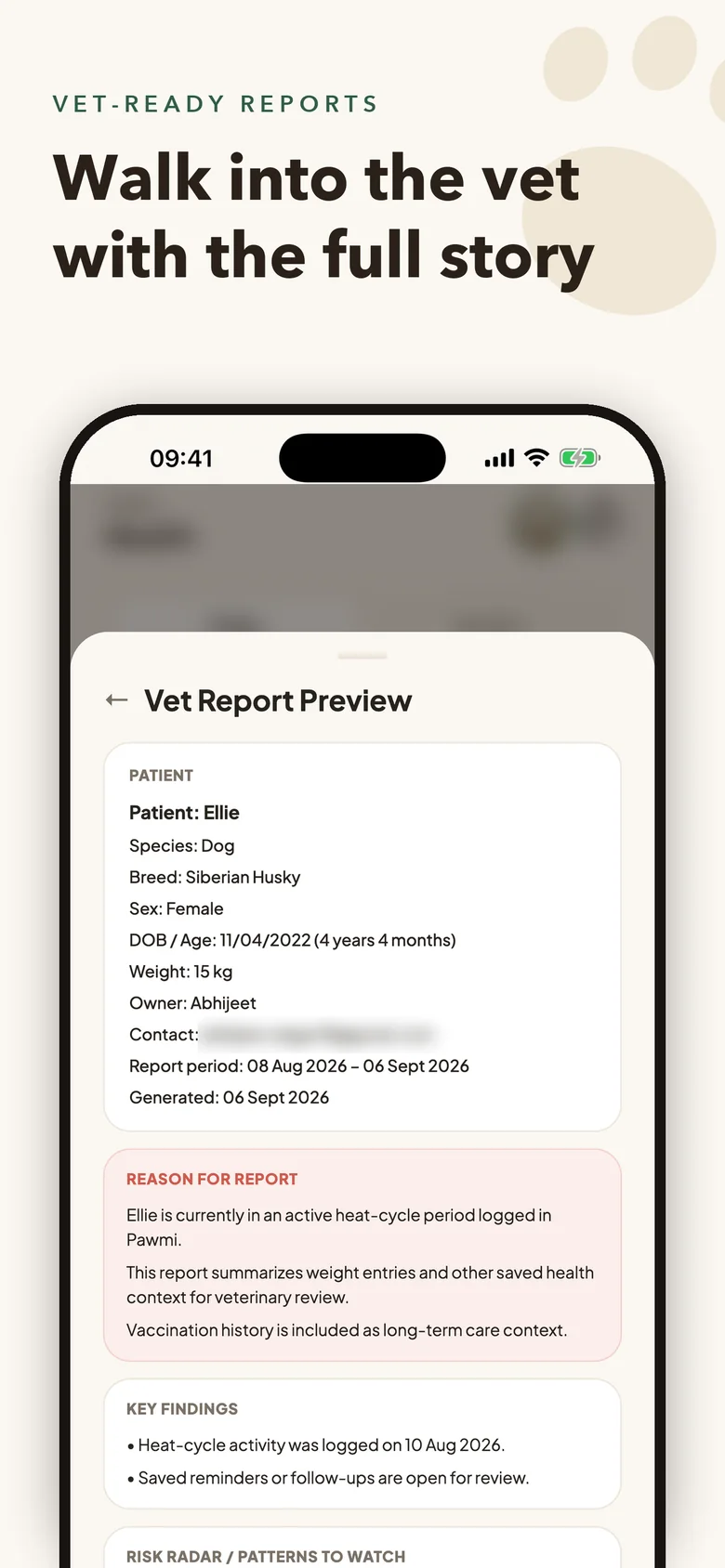
Snap a vet report, approve what Pawmi found, and keep the reminders, vaccine dates, and vet-ready context for every dog and cat in one place — without replacing professional veterinary care.
Available on iPhone, Android, and the web — one account, synced everywhere.