
Vet visit organizer for calmer, better-prepared appointments
A good vet visit starts before you enter the exam room. Pawmi helps organize records, symptom notes, medications, reminders, and questions so you can share clearer context with your veterinarian.
Available on iPhone, Android, and the web — one account, synced everywhere.
What is a vet visit organizer?
A vet visit organizer helps pet parents collect records, symptoms, medications, vaccine history, questions, timelines, and follow-ups before a veterinary appointment. The goal is to walk in with useful context, not to self-diagnose or replace the veterinarian's judgment.
How do most pet parents prepare for vet visits today?
Most preparation happens under pressure, usually the night before or in the waiting room.
- Night-before record searches
- Scrolling through photos
- Checking emails for old reports
- Trying to remember questions
- Relying on memory during a short appointment
- Forgetting important details once the visit starts
Why does last-minute vet visit prep break down?
Appointment time is limited, symptom timelines matter, medication names and doses get forgotten, questions disappear, and past reports may be needed. Even calm pet parents can blank once the appointment starts. A better system gives you the right details before the conversation begins.
What should you walk into the vet with?
A better system is simple enough to maintain on ordinary days and clear enough to use when care gets stressful.
A symptom timeline
List each symptom with the date it appeared so your vet can spot patterns — a two-week cough tells a different story than a two-day one.
Relevant records
Attach past lab results, imaging reports, or specialist notes that relate to today's concern so the vet has full context on arrival.
Current medications
Drug names, dosages, and start dates help your veterinarian avoid interactions and decide whether to adjust the current treatment plan.
Recent vaccines
Knowing which vaccines are current and which are overdue lets the vet update protection without duplicating doses unnecessarily.
Behavior and appetite changes
Eating less, sleeping more, or hiding can signal pain or illness. Recording these shifts gives the vet early clues that lab work alone might miss.
Questions for the veterinarian
Write your questions before the visit — appointments move fast, and having a list means you leave with answers instead of afterthoughts.
A place to record follow-up notes
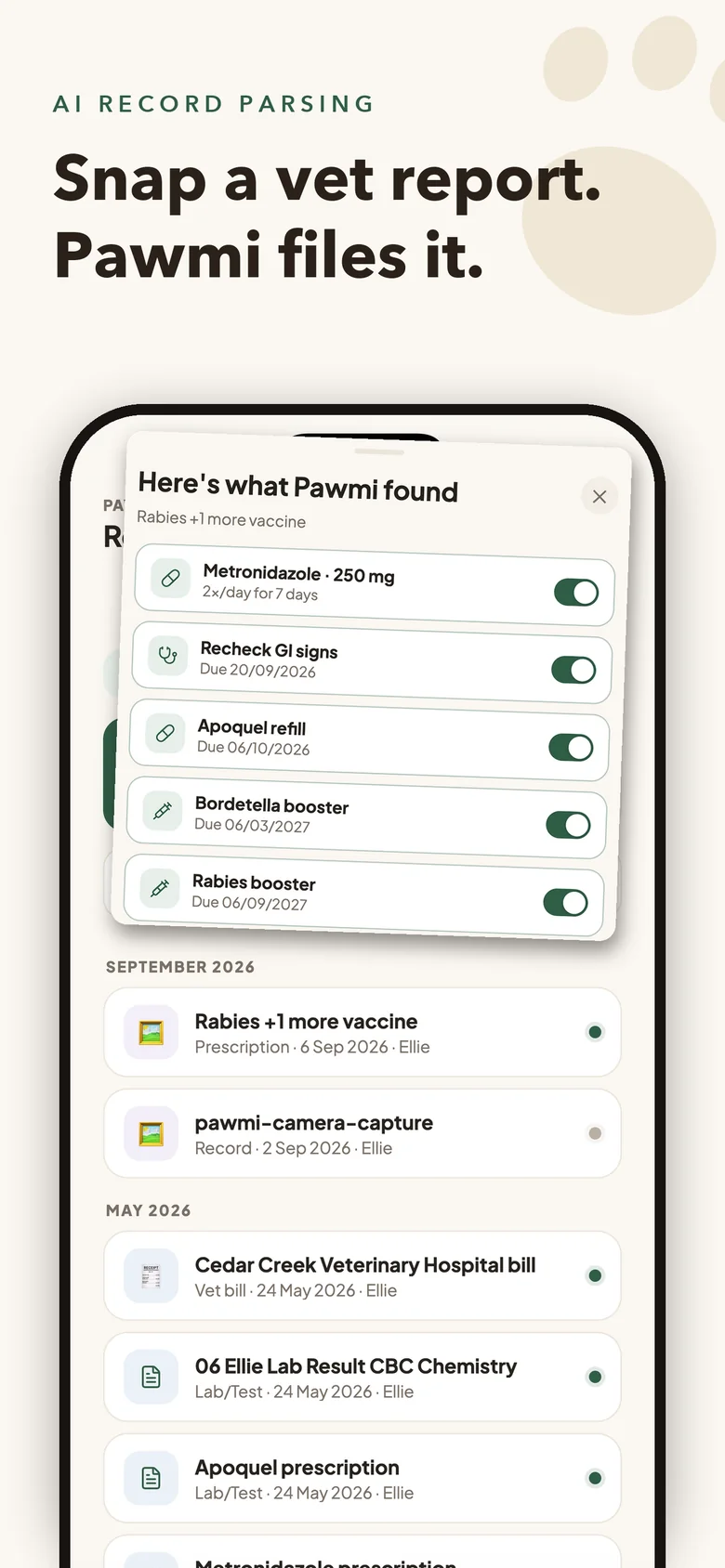
Capture the vet's recommendations right after the appointment while details are still fresh — or snap the discharge notes and let Pawmi list the medications, rechecks, and boosters it found so you can save them as reminders in one tap.
How does Pawmi help organize vet visits?
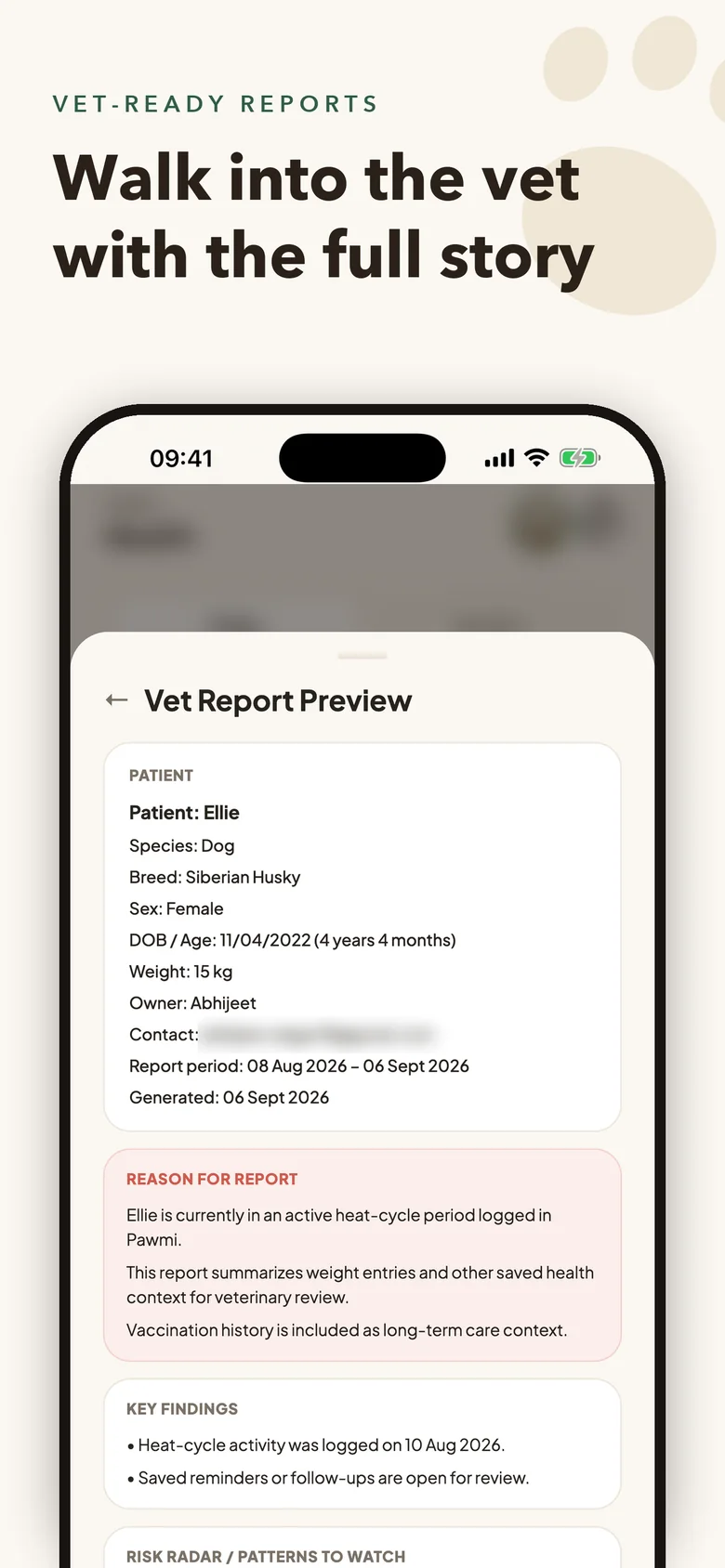
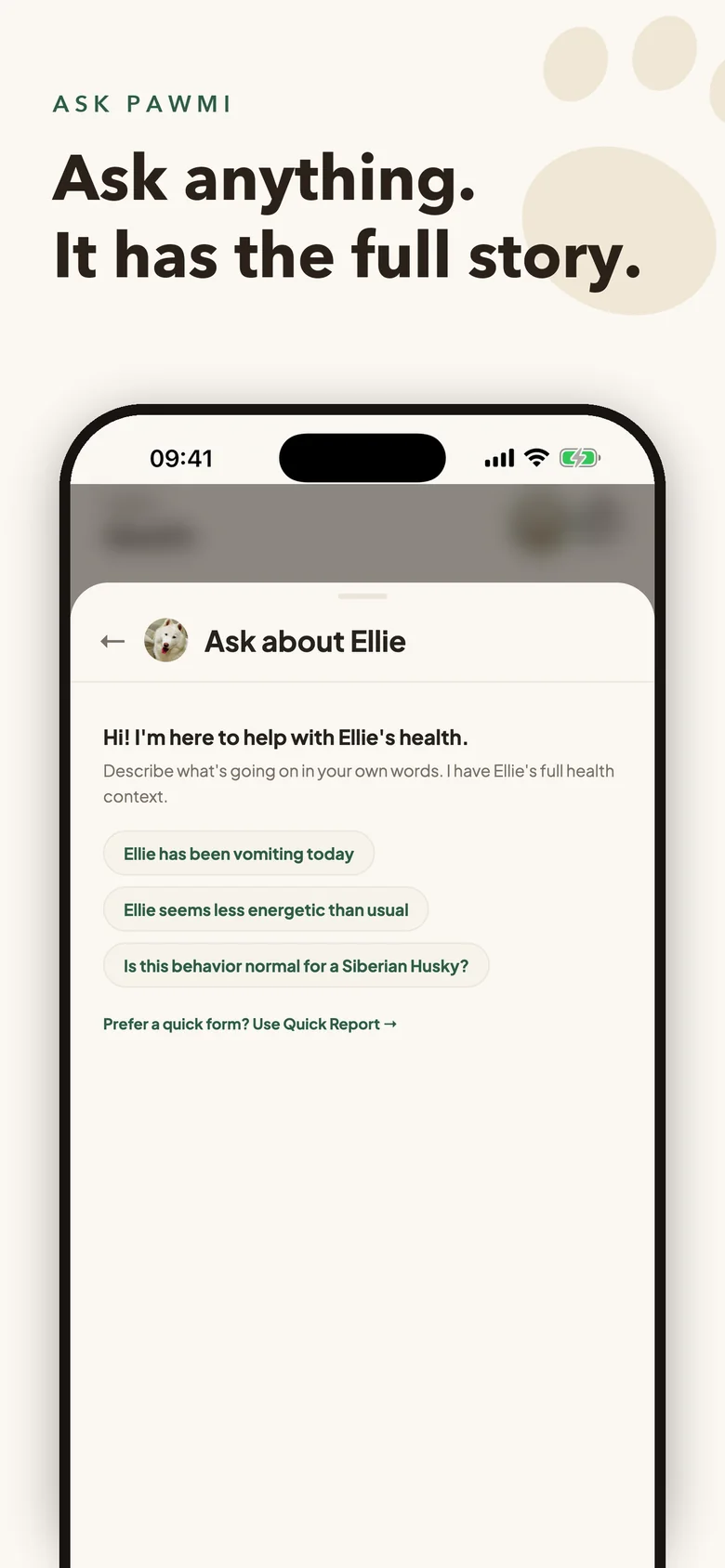
Pawmi keeps records, health notes, reminders, and vet-ready summaries connected by pet. Before a visit, pick the reason and a timeframe and Pawmi builds a Vet Report PDF from what you have already logged: symptoms, weight trend, vaccination history, medications, key findings, and discussion points for the vet. Ask Pawmi can talk through your concerns using your pet's own records first. Pawmi helps with preparation; it does not replace calling a vet when your pet needs care.
Vet Visit Checklist
Use this checklist before the appointment and again right after the visit.
- Vaccine records
- Current medications
- Supplements
- Recent symptoms
- Photos or videos of intermittent symptoms
- Food brand and diet changes
- Stool sample if requested
- Previous lab results
- Questions list
- Follow-up instructions after the visit
Questions to ask by appointment type
A short checklist of what to bring, plus questions prepared ahead of time, makes the visit calmer and the conversation more specific. Use these prompts to build your own list before the appointment.
Vaccines
- Which vaccines are due based on my pet's age, lifestyle, and location?
- When is the next booster due?
- What proof should I keep for boarding, grooming, or travel?
Symptoms
- What changes should I monitor at home?
- When should I call back?
- Would photos, videos, or a symptom log help if this continues?
Skin or itching
- Could grooming, food, parasites, or environment be relevant?
- What should I avoid trying at home?
- When should we recheck if itching continues?
Medication follow-up
- How should this medication be given?
- What side effects or warning signs should I watch for?
- What should I do if a dose is missed?
Senior pet
- Which trends should we monitor between visits?
- Are weight, appetite, mobility, or lab changes worth tracking more closely?
- When should the next wellness check happen?
Puppy or kitten
- What is the vaccine and deworming plan?
- What socialization or exposure limits should we follow?
- What growth or appetite changes should we track?
Example Vet Visit Summary
This is an example of how to organize notes before a visit. It is not medical advice.
- Pet: Ellie
- Recent observations: appetite lower for 3 days, drinking normally, no vomiting, lower activity, weight stable
- Questions: could this be related to routine, food, weather, or stress? Should follow-up testing be discussed?
- Current medications: none or as recorded
See Pawmi in action
Real screens from Pawmi 1.4.0 on iPhone, picked to match this guide.
Keep building a calmer pet care system
These related care guides cover the adjacent tasks pet parents usually manage in the same messy places.
Frequently asked questions
What should I bring to a vet appointment?
Bring current medications, recent vaccine proof, relevant records, a symptom timeline, photos or videos if helpful, and your most important questions.
How do I prepare for a vet visit?
Write the main concern, when it started, how often it happens, current medications, appetite or behavior changes, and what you want to ask before the appointment.
How do I remember questions for my veterinarian?
Keep a running question list as issues come up. Put the most important questions first so they are covered even if appointment time is limited.
Should I track symptoms before a vet visit?
Yes. A simple timeline with dates, frequency, severity, and related changes can help your veterinarian understand the pattern.
How far back should I record symptoms?
Start with when you first noticed the concern. If it is a recurring issue, include older episodes and any related records that may help your veterinarian.
What information helps veterinarians most?
Specific dates, symptom frequency, medication details, appetite and bathroom changes, relevant records, and clear questions are often more useful than vague summaries.
Can Pawmi create a vet-ready report?
Yes. Pick the reason for the visit and a timeframe, and Pawmi builds a PDF with symptoms, weight trend, vaccination history, current medications, key findings, and discussion points for the vet. Vet Report export is free.
Should I use Pawmi instead of calling a vet?
No. Pawmi is for organization and preparation. If your pet has urgent symptoms or you are worried, contact a veterinarian or emergency clinic.
Make pet care easier to remember and explain
Snap a vet report, approve what Pawmi found, and keep the reminders, vaccine dates, and vet-ready context for every dog and cat in one place — without replacing professional veterinary care.
Available on iPhone, Android, and the web — one account, synced everywhere.